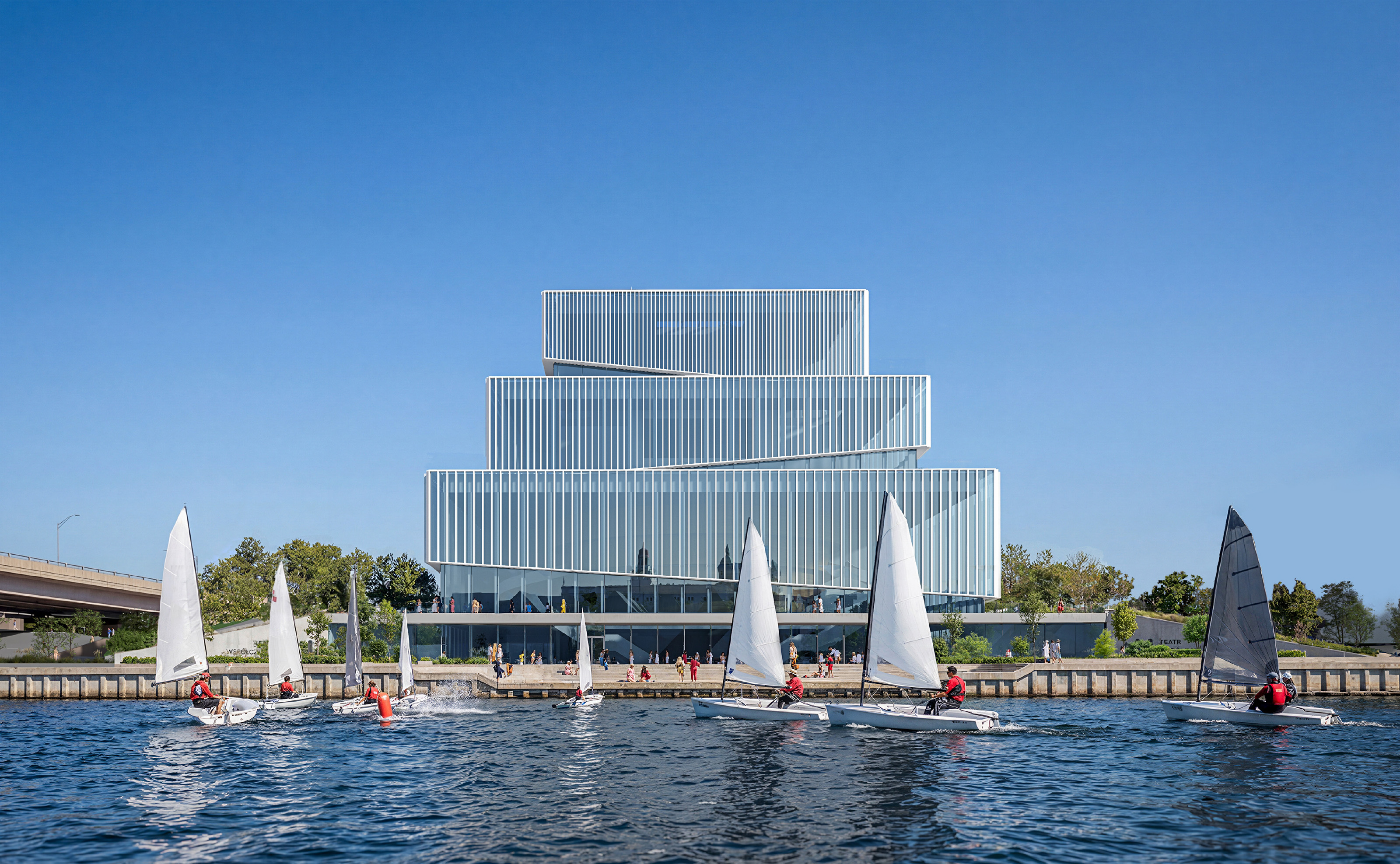
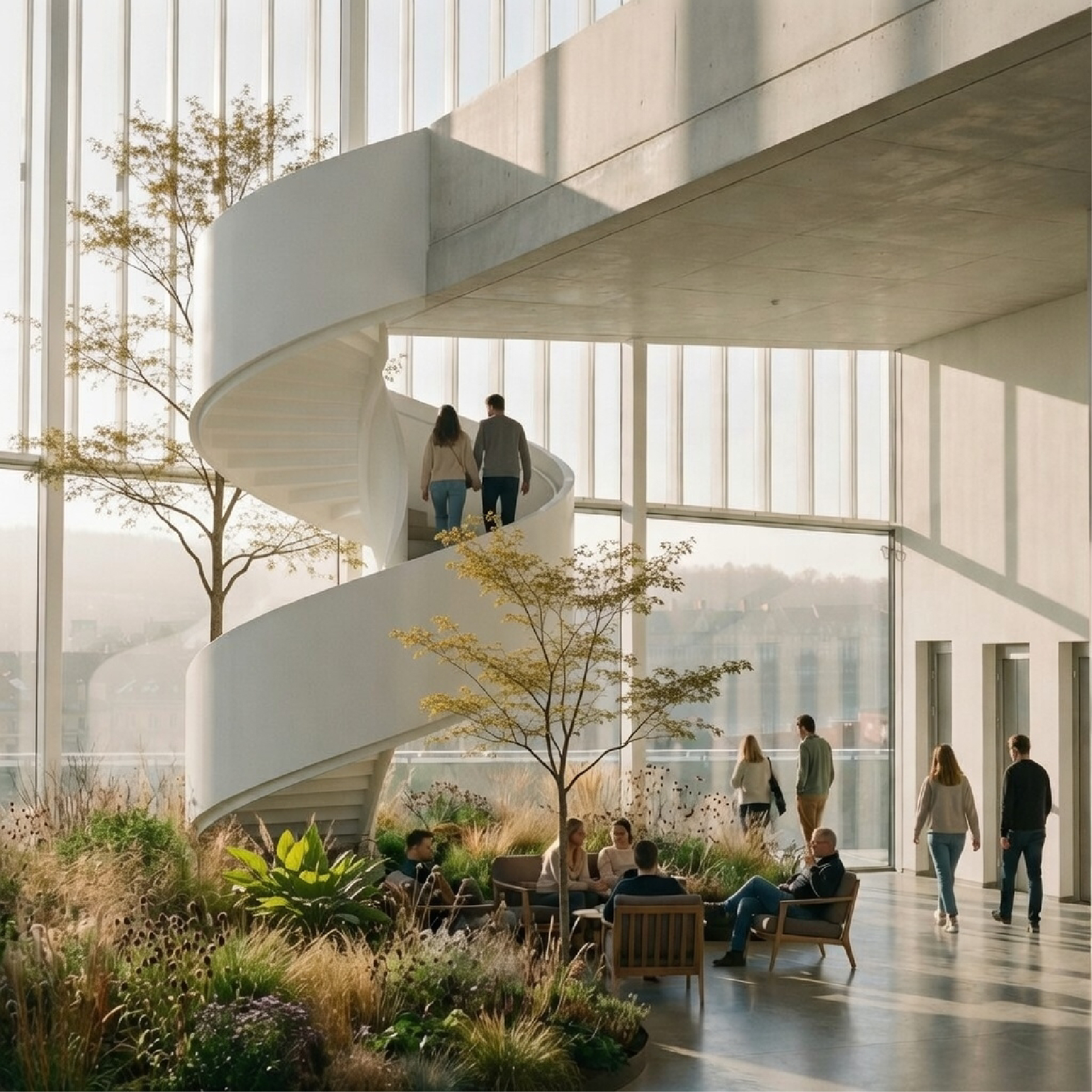
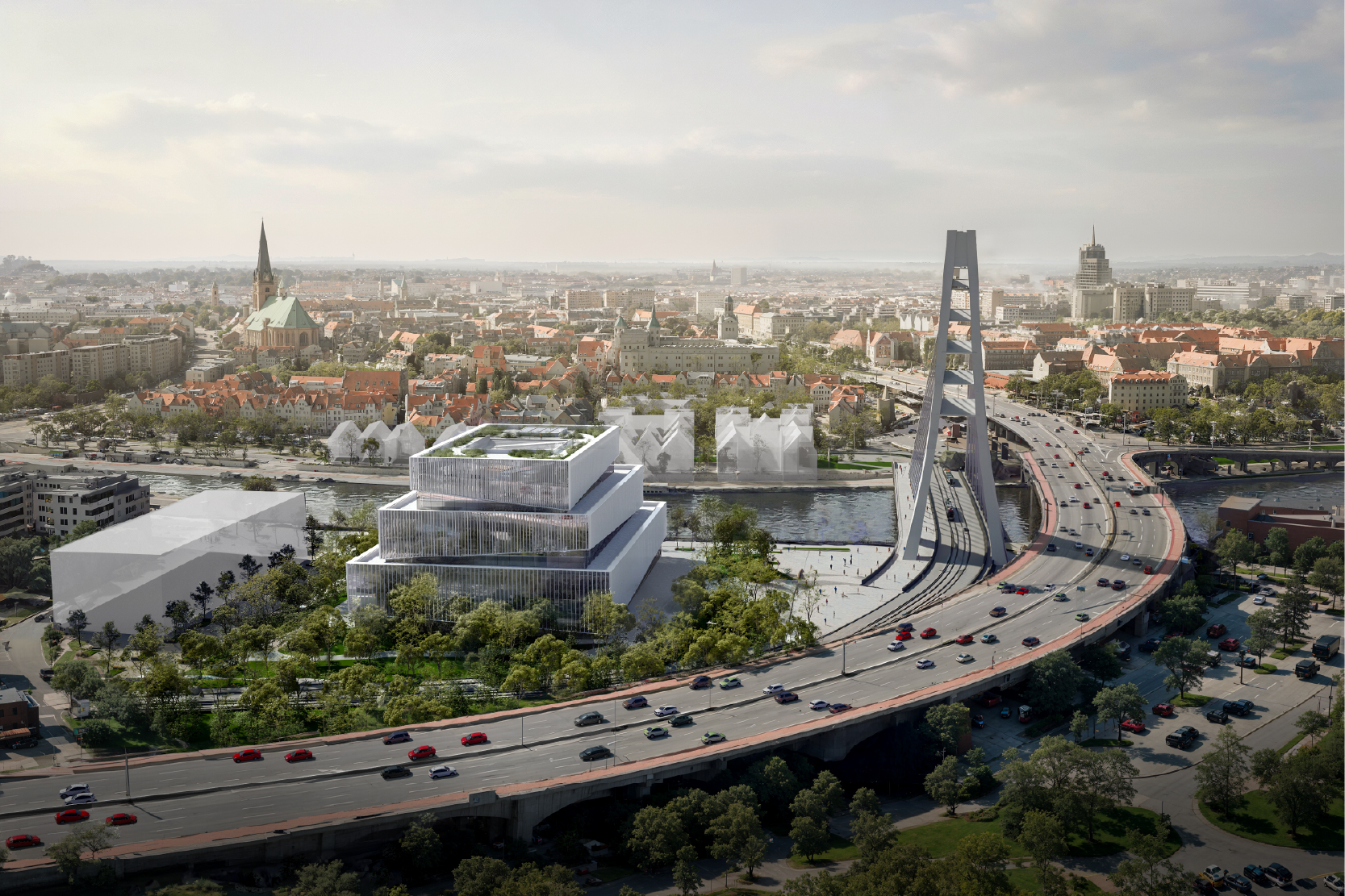
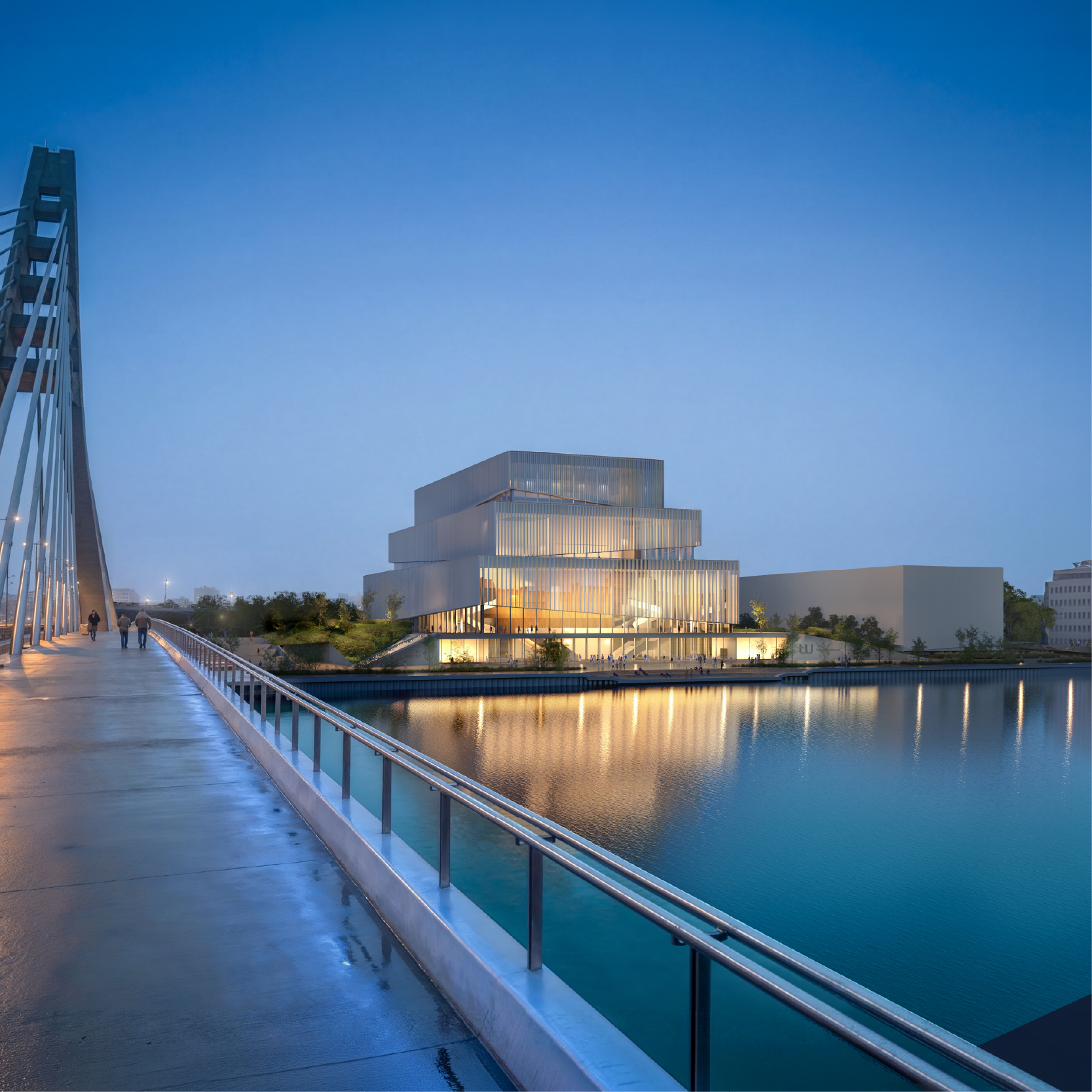
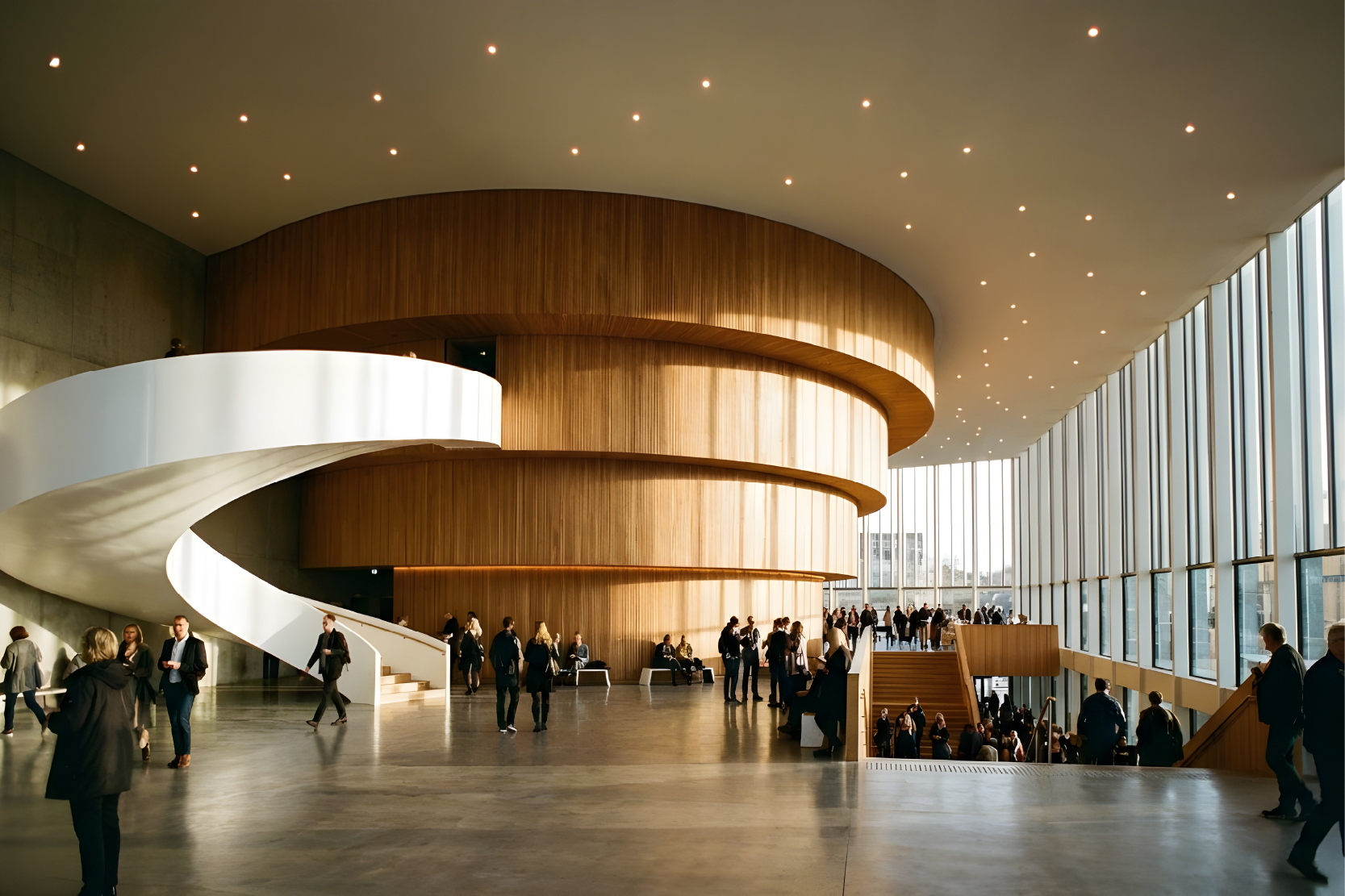
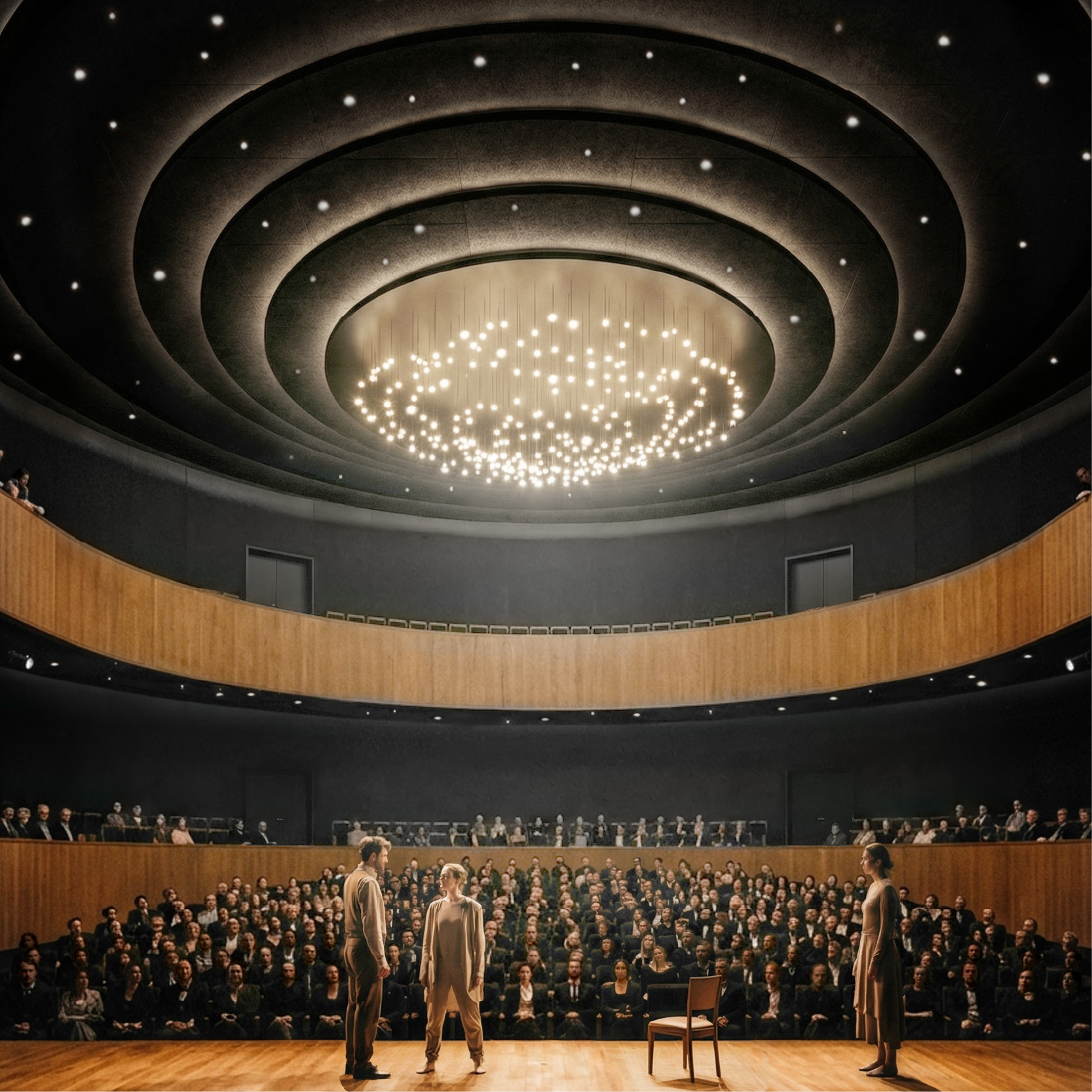
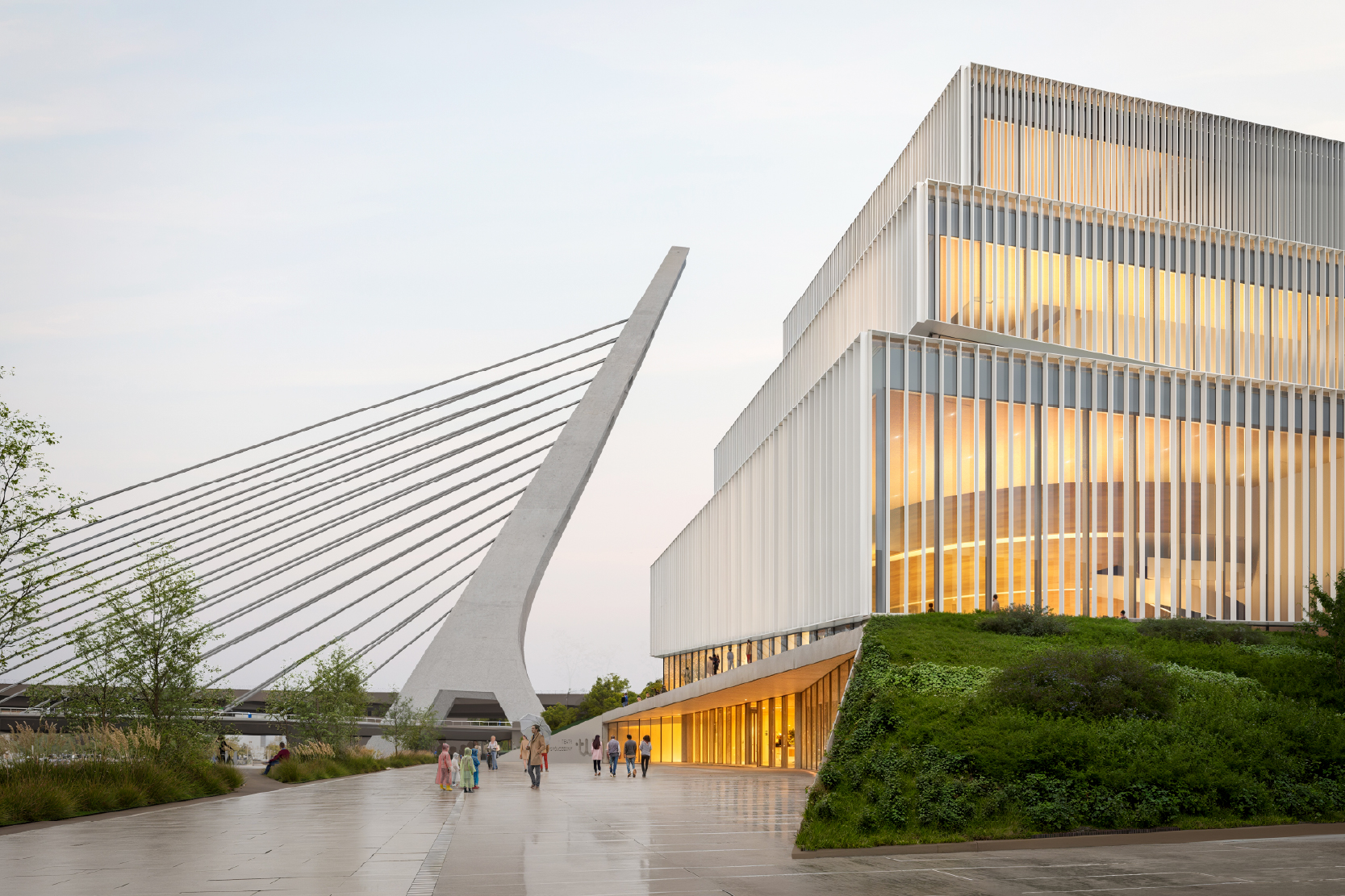
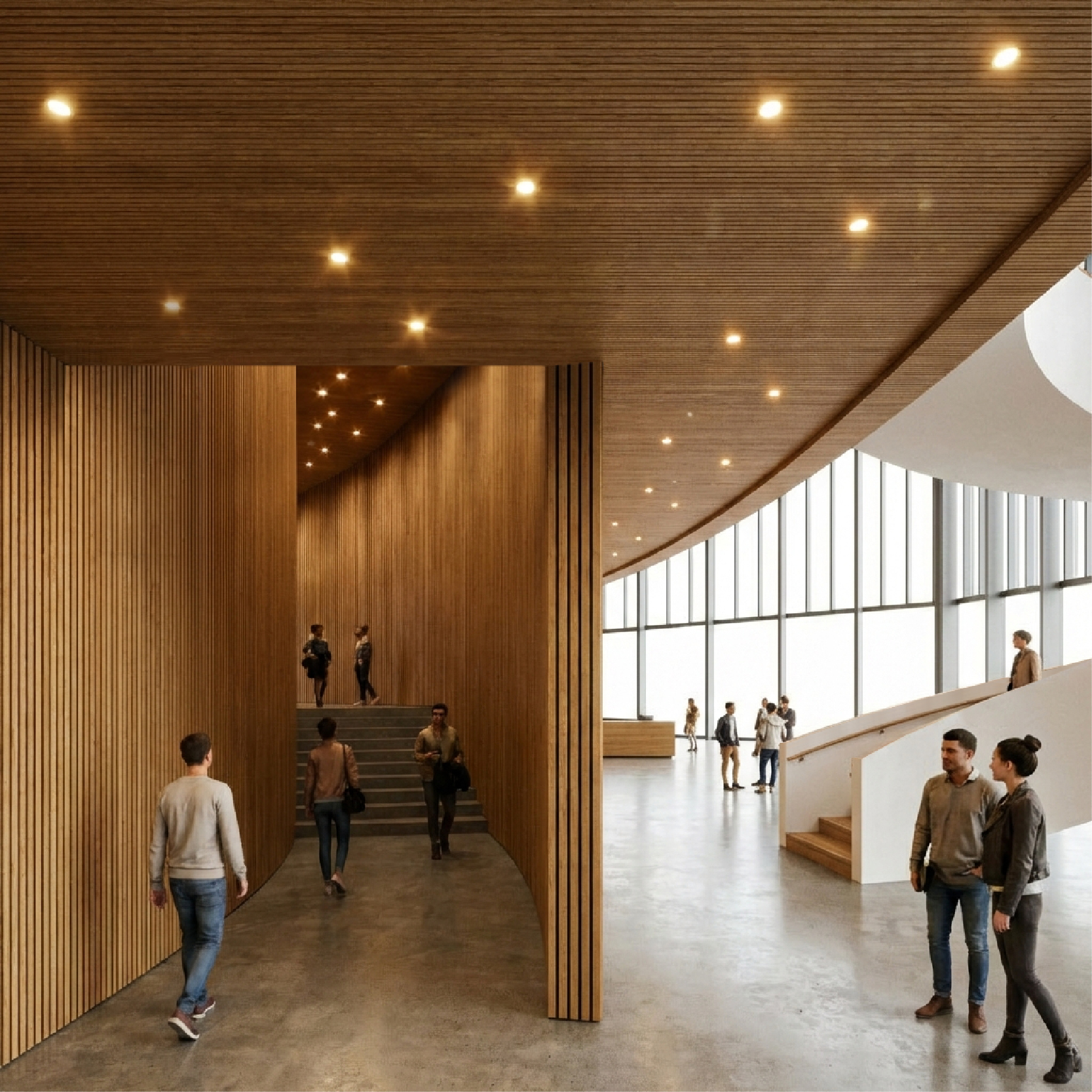
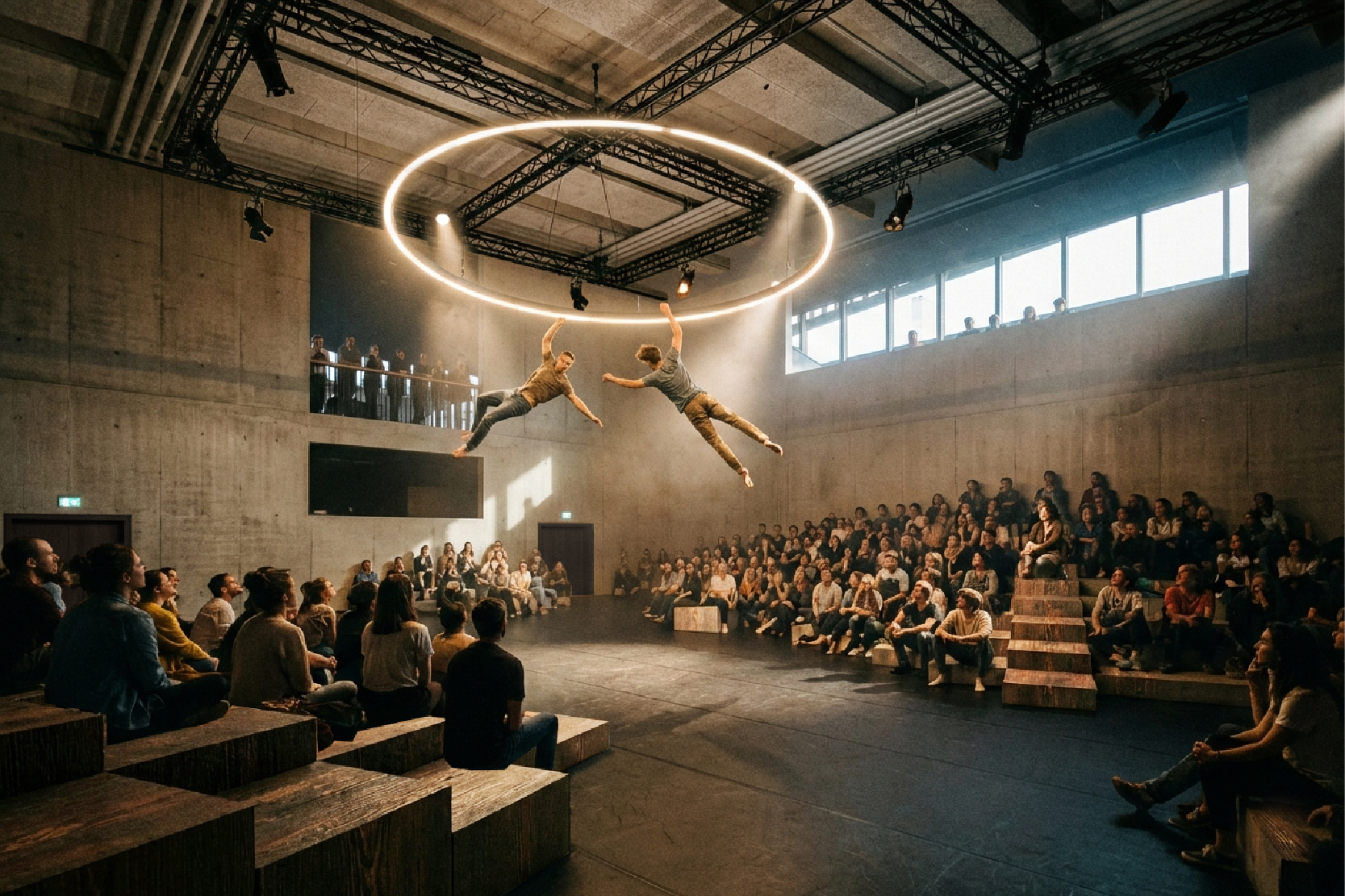
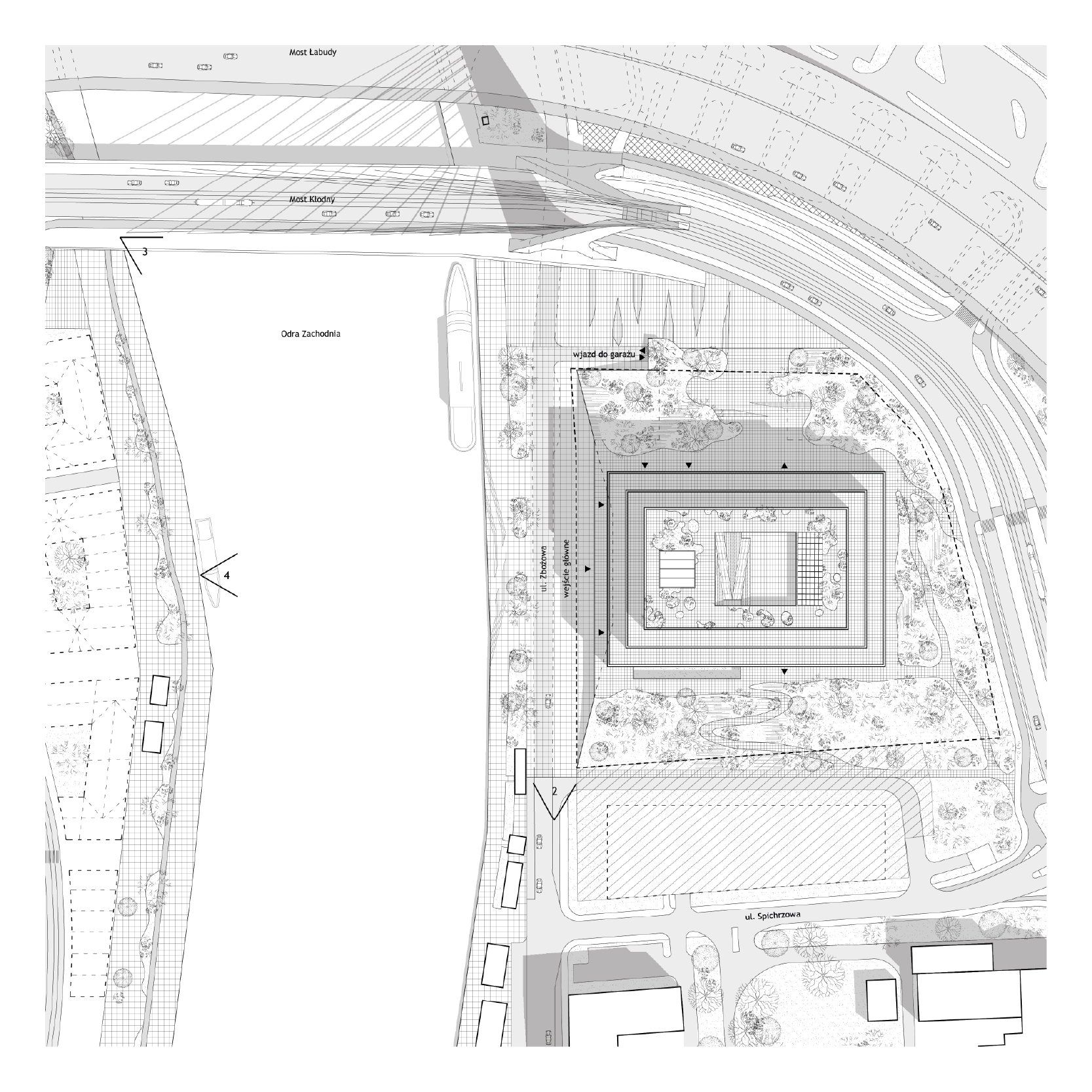
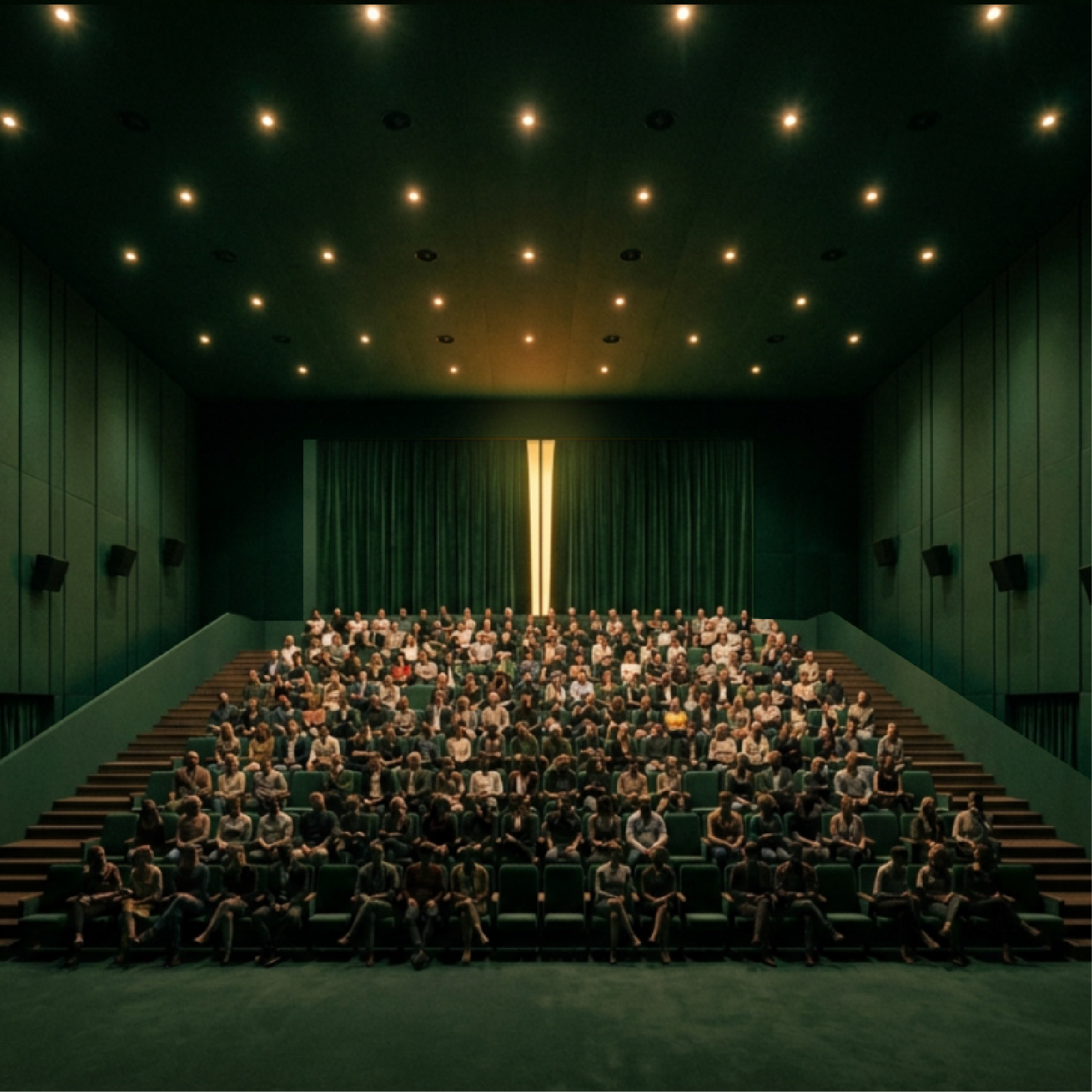
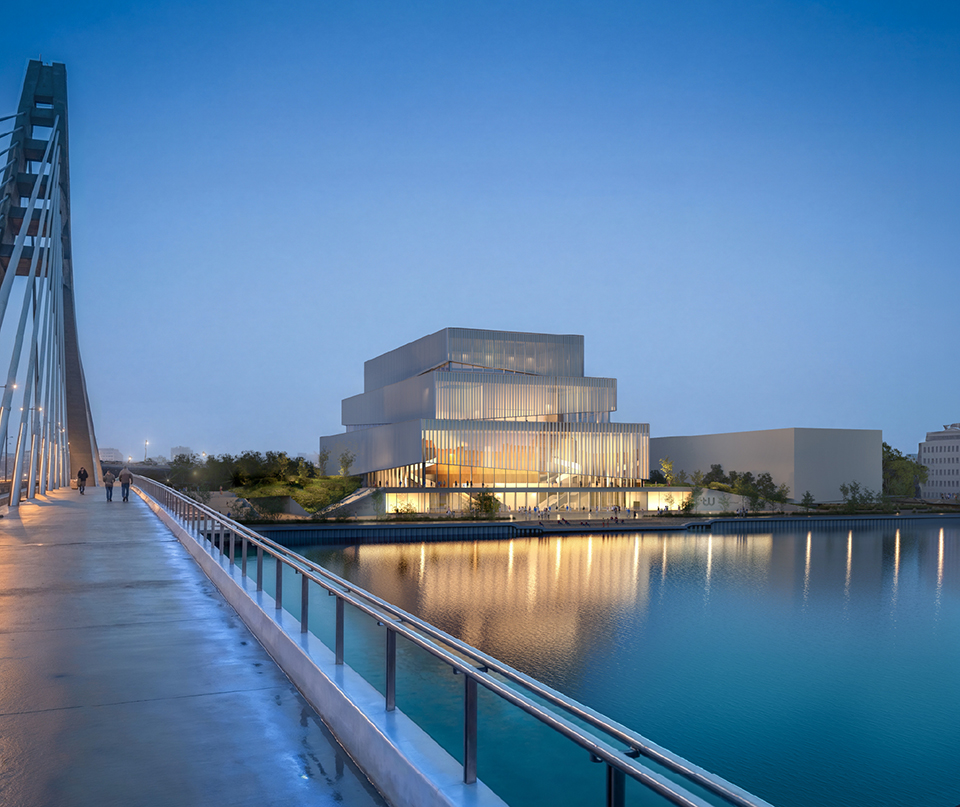
"Theatre is a place where man meets himself," wrote Jerzy Grotowski, indicating that the stage is not merely a space for a spectacle, but a mirror of human nature. The design for the new headquarters of the Contemporary Theatre in Szczecin expands upon this thought: it is an open, layered building immersed in greenery, serving not only as an art institution but also as a living fragment of the city. Situated by the Kłodny Bridge and the Odra River boulevards, the structure forms a natural link between the scale of the street and the monumentality of the crossing, seamlessly blending the urban fabric with the river landscape. The volume consists of a series of receding storeys which, much like theatrical wings, build tension between the visible and the hidden. This cascading composition reduces the massing of the building, creating an urban foyer and viewpoints overlooking the Szczecin panorama. The transparent facade, with its rhythm of vertical divisions, references the typology of local public buildings—their order and monumentality—interpreting them through the language of contemporary lightness. The functional program comprises three stages: the main stage, which is the heart of the facility, featuring flexible seating and technical backstage facilities that allow for the staging of diverse theatrical forms; the experimental stage, which is modular and adaptable, serving as an interdisciplinary art laboratory; and the intimate stage, a cozy space that fosters a close relationship between the actor and the audience. A multi-level foyer connects the halls, providing access to the building from both the city side and the waterfront. The building plays on the contrast between the horizontality of the river and the vertical rhythm of the facade. Glazing opens the interiors to the water, while green roofs and terraces integrate the theatre into the riverside recreation system. This is an architecture of dialogue: between art and everyday life, between the city and the river.